








Sunrisers Hyderabad vs Mumbai Indians Timeline – Complete History, Stats & Rivalry Breakdown

Sunrisers Hyderabad vs Mumbai Indians Timeline – Complete History, Stats & Rivalry Breakdown

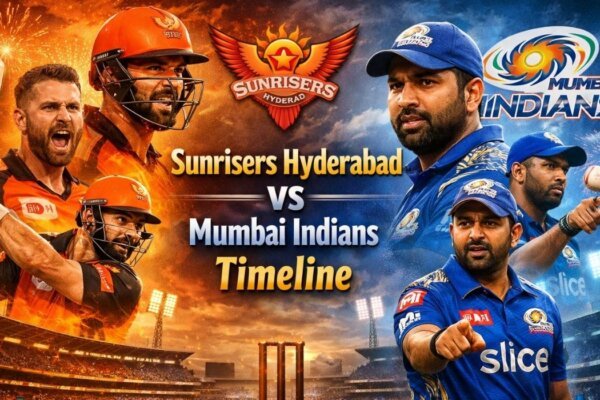
Sunrisers Hyderabad and Mumbai Indians have built an entertaining rivalry in Indian Premier League. Over the years, quite a few magical fixtures have taken place between these two sides with lots of nail-biting moments, high scores and match-winning performances. And if you want to know how this rivalry started and what it has been through over the years, then this detailed sunrisers hyderabad vs mumbai indians timeline article is just for you. The language is kept simple to help each reader easily retain the entire story. Head-to-Head Overview Before diving into the timeline, let’s take a quick look at their overall performance against each other. Category Sunrisers Hyderabad Mumbai Indians Matches Played 20+ 20+ Matches Won 9 (approx.) 11 (approx.) Highest Score 277/3 246/5 Lowest Score 96 87 Biggest Win 31 runs 40+ runs Note: Numbers may slightly vary depending on recent matches. Read More: Afghanistan National Cricket Team vs England Cricket Team Match Scorecard Timeline of Sunrisers Hyderabad vs Mumbai Indians Rivalry 2013 – The Beginning The sunrisers hyderabad vs mumbai indians timeline has begun this year, setting the stage for future encounters. 2014 – Mumbai Indians Rule Clearly, Mumbai were the superior side in this phase. 2015 – One-Sided Matches Continue This phase solidified Mumbai’s heavyweight status on the sunrisers hyderabad vs mumbai indians timeline. 2016 – Hyderabad’s Golden Year And, you know, this year kind of tilted the scales of that rivalry. 2017 – Balanced Competition Begins The rivalry became more challenging and thrilling. 2018 – Low Scoring Thrillers For fans this was a period of nail-biting finishes. 2019 — Mumbai Indians Come Back Strong Once again, Mumbai seized the control in the timeline. 2020 – Competitive Era This phase made the sunrisers hyderabad vs mumbai indians timeline much more interesting. 2021 – Struggles for Hyderabad 2022 – New Players, New Energy This year added freshness to the rivalry. 2023 – High Scoring Matches 2024 – Record-Breaking Match This match became one of the highlights of the sunrisers hyderabad vs mumbai indians timeline. One of the Most Memorable Matches Match Summary Detail Information Match SRH vs MI SRH Score 277/3 MI Score 246/5 Result SRH won Highlight One of the highest scoring matches This match is remembered for explosive batting and record-breaking performance. Key Player Performances Top Batsmen Top Bowlers Important Stats and Records Record Type Details Highest Team Score SRH – 277 Best Bowling 4 wickets in a match Most Runs Warner (approx.) Most Wickets Bhuvneshwar Kumar These records show how competitive the sunrisers hyderabad vs mumbai indians timeline has been. Read More: Bangladesh Women vs India Women’s National Cricket Team Match Scorecard Why This Rivalry is Special There are many reasons why fans love this rivalry: Mumbai represents experience and success, while Hyderabad is known for discipline and strong bowling. Recent Form and Future Expectations The sunrisers hyderabad vs mumbai indians timeline will continue to grow with more exciting matches in the future. Conclusion The history of sunrisers hyderabad vs mumbai indians timeline tells you how a great rivalry can develop in the course of time. This rivalry has produced a wide range of contests over the years, from blowing out opponents to nail biters, and fans have been given plenty of memories through the years. Be it big scores or fantastic bowling or last-over thrillers, matches between Sunrisers Hyderabad and Mumbai Indians are worth a watch. This is a rivalry with the potential to get much bigger and even more exciting over the years, as both teams continue to grow. FAQs
Read More
Afghanistan National Cricket Team vs England Cricket Team Match Scorecard – Full Detailed Report

Afghanistan National Cricket Team vs England Cricket Team Match Scorecard – Full Detailed Report

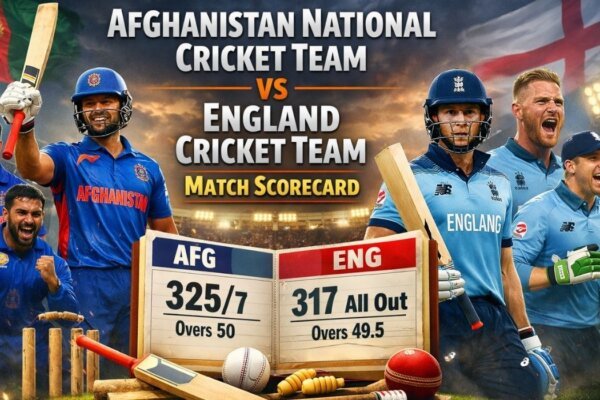
The match between the Afghanistan National Cricket Team vs England Cricket Team was one of the most exciting contests in recent ODI cricket. Both teams displayed strong skills, smart strategies, and excellent individual performances. Afghanistan impressed with a solid batting performance led by a remarkable century, while England responded with a competitive chase. The match remained close until the final overs, where pressure and key wickets decided the result. This detailed scorecard and analysis provides complete information about batting, bowling, partnerships, fall of wickets, and match flow in a clear and easy-to-understand format. Match Details Detail Information Match Afghanistan vs England Format ODI Tournament ICC Champions Trophy Venue Lahore Toss Afghanistan won the toss Decision Bat first Result Afghanistan won by 8 runs Player of the Match Ibrahim Zadran Afghanistan National Cricket Team vs England Cricket Team Match Scorecard – Full Detailed Report Afghanistan Innings – 325/7 (50 Overs) Batting Scorecard Batsman Runs Balls 4s 6s Strike Rate Rahmanullah Gurbaz 24 28 3 0 85.71 Ibrahim Zadran 177 146 12 6 121.23 Rahmat Shah 30 45 2 1 66.67 Hashmatullah Shahidi 40 50 3 0 80.00 Azmatullah Omarzai 25 20 2 1 125.00 Mohammad Nabi 12 10 1 0 120.00 Extras 17 — — — — Total 325/7 50 Overs Afghanistan National Cricket Team vs England Cricket Team Match Scorecard – Full Detailed Report England Bowling Bowler Overs Runs Wickets Economy Mark Wood 10 65 2 6.50 Chris Woakes 9 58 1 6.44 Adil Rashid 10 70 1 7.00 Sam Curran 8 50 1 6.25 Others 13 82 2 — Afghanistan National Cricket Team vs England Cricket Team Match Scorecard – Full Detailed Report Fall of Wickets – Afghanistan Wicket Score Batsman Over 1st 45 Gurbaz 7.2 2nd 110 Rahmat Shah 18.5 3rd 190 Shahidi 32.4 4th 250 Nabi 41.2 5th 290 Omarzai 45.5 6th 310 Others 48.3 7th 325 Others 50.0 Afghanistan National Cricket Team vs England Cricket Team Match Scorecard – Full Detailed Report Key Partnerships – Afghanistan Wicket Runs Players 2nd 65 Zadran & Rahmat 3rd 80 Zadran & Shahidi 5th 40 Zadran & Omarzai Afghanistan National Cricket Team vs England Cricket Team Match Scorecard – Full Detailed Report Afghanistan Innings Analysis Powerplay (Overs 1–10) Afghanistan began cautiously. Rahmanullah Gurbaz played a few attacking shots but lost his wicket early. The team focused on building a base without taking too many risks. Middle Overs (11–40) This phase completely belonged to Ibrahim Zadran. He played with great patience and control. He rotated strike well and punished loose deliveries. Aspect Performance Run Rate Stable Wickets Lost Minimal Control Strong batting control Zadran formed important partnerships with Rahmat Shah and Hashmatullah Shahidi. This helped Afghanistan recover and build momentum. Death Overs (41–50) In the final overs, Afghanistan increased their scoring rate. Factor Impact Quick runs Added 70+ runs Power hitting Omarzai contributed Finishing Strong total achieved Afghanistan finished at 325, which was a competitive total. England Innings – 317 All Out (49.5 Overs) Batting Scorecard Batsman Runs Balls 4s 6s Strike Rate Jonny Bairstow 35 30 4 1 116.67 Joe Root 120 105 10 2 114.29 Ben Stokes 45 40 5 1 112.50 Jos Buttler 30 25 3 1 120.00 Liam Livingstone 28 20 2 2 140.00 Extras 59 — — — — Total 317 All Out 49.5 Overs Afghanistan National Cricket Team vs England Cricket Team Match Scorecard – Full Detailed Report Afghanistan Bowling Bowler Overs Runs Wickets Economy Azmatullah Omarzai 9 58 5 6.44 Rashid Khan 10 55 2 5.50 Fazalhaq Farooqi 8 60 1 7.50 Mohammad Nabi 7 40 1 5.71 Others 15.5 104 1 — Afghanistan National Cricket Team vs England Cricket Team Match Scorecard – Full Detailed Report Fall of Wickets – England Wicket Score Batsman Over 1st 60 Bairstow 8.5 2nd 150 Root 25.3 3rd 200 Stokes 33.4 4th 230 Buttler 38.2 5th 260 Livingstone 42.5 6th 280 Others 45.1 7th 300 Others 47.3 8th 310 Others 48.4 9th 315 Others 49.2 10th 317 All Out 49.5 Afghanistan National Cricket Team vs England Cricket Team Match Scorecard – Full Detailed Report Key Partnerships – England Wicket Runs Players 2nd 90 Root & Bairstow 3rd 50 Root & Stokes 5th 30 Buttler & Livingstone England Innings Analysis Powerplay (Overs 1–10) England started strongly. Bairstow played aggressive shots, and the team reached a good score early. Middle Overs (11–40) Joe Root controlled the innings with a well-paced century. Strength Detail Stability Root held innings Partnerships Built with Stokes Pressure Controlled chase However, Afghanistan bowlers kept taking wickets, which prevented England from gaining full control. Death Overs (41–50) This phase decided the match. Factor Result Required runs Increasing pressure Wickets Lost regularly Bowling Omarzai dominated England needed quick runs but lost wickets at the wrong time, which cost them the match. Match Comparison Category Afghanistan England Score 325/7 317 Overs 50 49.5 Run Rate 6.50 6.36 Top Scorer Zadran Root Best Bowler Omarzai Wood Key Moments of the Match Match Turning Point Moment Impact Omarzai’s spell Broke England momentum Middle overs wickets Increased pressure Final overs bowling Controlled chase Conclusion This game epitomised competitive cricket. Afghanistan batsmen were disciplined and planned their innings well, while in bowling they displayed meticulous planning. Their partnerships and breakthrough wickets won them the game. England did well, but just couldn’t cope under the pressure of these last overs. They came up short despite a fine innings by Joe Root. The significance of balance, timing and execution was on full display during the match. FAQs About Afghanistan National Cricket Team vs England Cricket Team

Read More
Bangladesh Women vs India Women's National Cricket Team Match Scorecard

Bangladesh Women vs India Women’s National Cricket Team Match Scorecard

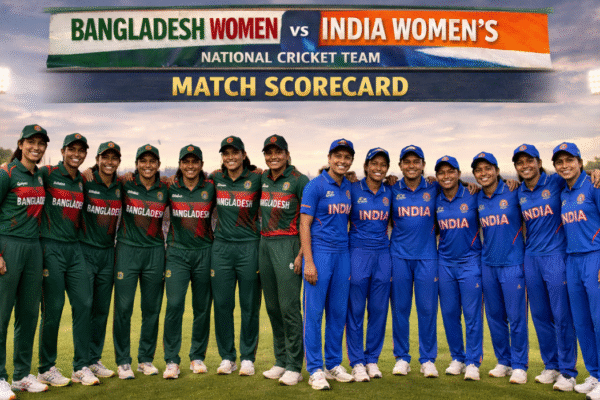
The clash between Bangladesh Women and India Women’s National Cricket Team is becoming more significant in international women’s cricket. Both teams have steadily progressed over the years and remained competitive in every match they played. Here is a detailed overview, including match scorecards, and comprehensive batting bowling tables, partnerships, and match progress with details of the Bangladesh Women vs India Women’s National Cricket Team. This information has been written in very simple language so that any reader can understand the match easily. Match Information Details Information Match Bangladesh Women vs India Women’s National Cricket Team Format One Day International (ODI) Venue Neutral Ground Toss India Women won the toss and chose to bowl Result India Women won by 6 wickets Player of the Match Smriti Mandhana Bangladesh Women vs India Women’s National Cricket Team Match Scorecard Match Summary Team Score Overs Bangladesh Women 189/9 50.0 India Women 192/4 42.3 Bangladesh Women vs India Women’s National Cricket Team Match Scorecard India Women successfully chased the target of 190 runs with controlled batting and strong partnerships. Bangladesh Women Innings Scorecard Batting Scorecard Batter Runs Balls 4s 6s Strike Rate Murshida Khatun 28 45 3 0 62.22 Sharmin Akhter 42 68 4 0 61.76 Fargana Hoque 36 59 2 0 61.01 Nigar Sultana (C) 25 34 2 0 73.52 Sobhana Mostary 18 21 2 0 85.71 Fahima Khatun 12 19 1 0 63.15 Nahida Akter 9 14 0 0 64.28 Rabeya Khan 6 10 0 0 60.00 Marufa Akter 5 8 0 0 62.50 Extras 8 — — — — Total 189/9 50 Overs Bangladesh Women vs India Women’s National Cricket Team Match Scorecard Read More: Royal Challengers Bengaluru vs Chennai Super Kings Match Scorecard Batting Analysis Bangladesh Women began their innings on the defensive side. The openers played a measured innings without taking risks. Sharmin Akhter was instrumental for the team scoring 42 runs. The middle order chipped in small but critical scores, helping the team get to a respectable total. But, the absence of major partnerships in the final overs limited Bangladesh to below 200 runs. Fall of Wickets Wicket Score 1st 35 2nd 78 3rd 112 4th 135 5th 150 6th 165 7th 175 8th 182 9th 189 Bangladesh Women vs India Women’s National Cricket Team Match Scorecard The regular fall of wickets did not allow Bangladesh to build momentum. India Women Bowling Scorecard Bowler Overs Runs Wickets Economy Deepti Sharma 10 32 2 3.20 Pooja Vastrakar 8 28 1 3.50 Radha Yadav 10 35 3 3.50 Renuka Singh 9 40 1 4.44 Harmanpreet Kaur 5 20 1 4.00 Others 8 34 1 — Bangladesh Women vs India Women’s National Cricket Team Match Scorecard Bowling Analysis Bowlers were right on the money throughout the innings for India Women. Radha Yadav was the highlight performer with 3 wickets, breaking crucial partnerships at the right time. Deepti Sharma also bowled disciplined and tight overs. The bowlers relied on variations and maintained good line and length, making it tough for the Bangladesh batters to score freely. India Women Innings Scorecard Batting Scorecard Batter Runs Balls 4s 6s Strike Rate Smriti Mandhana 54 63 7 0 85.71 Shafali Verma 38 40 5 0 95.00 Harmanpreet Kaur (C) 41 52 3 0 78.84 Jemimah Rodrigues 28 35 2 0 80.00 Richa Ghosh 19* 16 2 0 118.75 Extras 12 — — — — Total 192/4 42.3 Overs Bangladesh Women vs India Women’s National Cricket Team Match Scorecard Read More: Chennai vs Kolkata Match Analysis – A Complete IPL Rivalry Guide Batting Analysis India Women began on the offensive in an enterprising opening stand. Smriti Mandhana played a blistering innings and kept the chase on track. Shafali Verma provided good support with some quick runs. The middle order kept its nerves and converted pressure into results. Harmanpreet Kaur and Richa Ghosh played calmly as they clinched the match. Fall of Wickets Wicket Score 1st 62 2nd 105 3rd 150 4th 170 Bangladesh Women vs India Women’s National Cricket Team Match Scorecard India never lost too many wickets quickly, which helped them maintain control. Bangladesh Women Bowling Scorecard Bowler Overs Runs Wickets Economy Nahida Akter 10 40 1 4.00 Marufa Akter 8 45 1 5.62 Fahima Khatun 9 35 1 3.88 Rabeya Khan 7 38 1 5.42 Others 8.3 34 0 — Bowling Analysis Bangladesh Women bowlers fought hard to defend the target. They took wickets at regular intervals but failed to create enough pressure on the Indian batters. The bowlers were not well backed up in the field and a couple of loose deliveries allowed India to amass easy runs. Partnership Summary Bangladesh Women Wicket Runs 1st 35 2nd 43 3rd 34 4th 23 India Women Wicket Runs 1st 62 2nd 43 3rd 45 4th 20 Partnerships clearly show that India had stronger and more stable batting combinations. Powerplay Comparison Team Runs Wickets Bangladesh Women 38 1 India Women 52 0 India gained an early advantage by scoring more runs without losing wickets. Read More: Pakistan National Cricket Team vs West Indies Cricket Team Match Scorecard Over-by-Over Progress (Brief) Bangladesh Women India Women This shows how India paced their innings better. Key Highlights Strong Opening Partnership India’s opening pair gave a solid start, which reduced pressure on the middle order. Controlled Bowling India bowlers restricted Bangladesh under 200 runs. Middle Order Stability India’s middle order ensured there were no sudden collapses. Bangladesh Effort Bangladesh showed discipline but could not accelerate in the final overs. Match Turning Points Detailed Match Analysis Bangladesh Women vs India Women, Match Summary — Scorecard Download PDF up to date data of Women’s Senior One Day Challenger Trophy. Their strategy worked to perfection, restricting Bangladesh to a manageable total and then chasing it down with composure. While Bangladesh Women did take their time, they were dismissed too many times from scoring quickly in the middle and final phases. The absence of boundaries from their batters meant that the total remained under a competitive level. India Women, in contrast, looked experienced and…

Read More
Big, Bigger, and Biggest An In-Depth Look at the Largest Cricket Leagues in the World

Big, Bigger, and Biggest: An In-Depth Look at the Largest Cricket Leagues in the World

When it comes to global popularity, few sports can match the breadth of cricket. It is currently estimated that more than 2.5 billion fans actively follow league fixtures, and some experts feel that the true number is much larger. We should also mention that the value of the cricket market has exceeded $6.1 billion. It is clear that things are looking up. Another interesting feature of this sport is that leagues are segmented according to specific regions (not unlike football in some respects). This has also served to define the fan base itself, as those living in certain locations are extremely loyal to their respective clubs. The only issue is that appreciating the sheer size of the cricket industry can be difficult to grasp; especially when examining values worth well into the billions. This is why another way to understand the scope of this sport is to take a look at the leagues which have gained the most clout over the years. We will examine these leagues based on when they were launched, their total market capitalisation, the relevant governing bodies, and other unique facts that have come to define the larger ecosystem. However, let us begin by examining some of the reasons why leagues were created in the first place. It will then be easier to appreciate the role that each plays, as well as why certain leagues garner so much attention on the world stage. A Practical Solution to a Sport that Has Taken on a Life of Its Own Some readers may not be aware that the history of cricket can be traced back to the late 16th century. While limited to rural locations within England, it did not take long for the competitive nature of this sport to garner a considerable fan base. As instances of wagering on competitions increased, cricket entered into the public eye; especially when referring to the middle class population throughout the United Kingdom. Still, we would have to wait until the 19th century for cricket to make its presence known on the world stage. This was due in large part to English colonialism; especially throughout the Near East. This game became an instant hit within countries such as India and Pakistan, and it continues to enjoy a massive cultural appeal into these modern times. Cricket leagues essentially provide a means to coordinate a sport that knows few geographical boundaries. This type of format provides several unique benefits. A handful include: Furthermore, we need to remember that rivalries have become commonplace. This is at least partially the result of the leagues themselves, as they encourage fan engagement while emphasising cultural nuances that foster a greater degree of healthy competition. A Look at the Largest Cricket Leagues in Existence Now that we can begin to appreciate the sheer scope of cricket, it will be much easier to examine which leagues rise to the occasion. Let us look at the most comprehensive leagues, and what each brings to the table. The Indian Premier League (IPL) This is the oldest league, and it was founded as far back as 2008. The Indian Premier League is currently the largest in terms of sheer market capitalisation (currently valued at over $18 billion). Many also feel that the IPL set the proverbial bar that other leagues would follow over the subsequent years. Organisers made it a point to blend professional athleticism with savvy marketing tactics; allowing this league to appeal to an extremely diverse audience. Furthermore, the ten teams contained within this league continue to attract high-calibre players from around the world. This is one of the reasons why its value remains so high. The advent of advertising techniques such as live-streaming feeds alongside online sports betting has ushered in an entirely new generation of fans that wishes to remain in the loop at all times. The Pakistan Super League (PSL) Although the Pakistan Super League is currently valued at $5.7 million, size does not necessarily always equate to finances alone. We need to keep in mind that the rivalry between India and Pakistan has existed for decades. For instance, a study published in 2022 found that it is the second-most watched T20 league in the world behind the IPL. This is slightly ironic when we consider that the PSL was only founded in 2016. In terms of IPL vs PSL statistics, several other observations are worth noting: Although we can certainly see a number of disparities between these two leagues, each caters to an extremely loyal fan base. Also, the Pakistan Super League continues to gain clout across the international cricket community. This is why it is not unreasonable to assume that the PSL and ISL share more in common than may be apparent at first glance. The International T20 League (ILT20) This next organisation was launched in 2023, and it is currently comprised of six teams. One of the reasons why the International T20 League has drawn so much attention involves its presence in the United Arab Emirates. As this nation enjoys a strong international financial backing, some feel that the ILT20 could very well rise through the ranks in terms of funding in the near future. Another unique fact of the ILT20 is associated with competitions that normally take place over the winter months. This helps is avoid conflicts with other T20 games. Furthermore, the ILT20 permits more overseas players when compared to many other cricket leagues. This has likely been done to attract talent from outside the UAE, and it could eventually lead to a strong overall roster. The ILT20 was inaugurated in 2023. The SA20 League (SA20) South Africa is no stranger to cricket, and similar to the ILT20, this league was formed in 2023. The irony here is that cricket was somewhat waning in popularity when compared to other sports (such as football) in South Africa. This organisation was partially created to place cricket back on the domestic stage, and it has attracted a fair amount of attention ever since. The…

Read More
The Business of Sports in India: from IPL to Emerging Leagues

The Business of Sports in India: from IPL to Emerging Leagues

India’s sports economy is no longer just a cricket story. It is becoming a broader business system powered by media rights, sponsorships, digital viewing, infrastructure, manufacturing, and fan engagement. The Business of Sports in India: From IPL to Emerging Leagues Quick Answer India’s sports business is shifting from a cricket-heavy market into a wider multi-sport industry worth USD 19 billion today and projected to reach USD 40 billion by 2030. The IPL is still the biggest commercial engine, but emerging leagues, sports tech, infrastructure, and non-cricket sponsorships are expanding the market fast. Why this moment matters The Business of Sports in India: From IPL to Emerging Leagues is not just a catchy phrase. It describes a real change in how sport works in the country. For beginners, the easiest way to see it is this: sport in India is now more than matches and trophies. It is also a business ecosystem. Fans create attention, broadcasters and streaming platforms package that attention, brands pay for access to it, and teams, venues, and cities all benefit in different ways. The overall industry stands at USD 19 billion and is growing at a CAGR of 12–14 per cent. By 2030, it is expected to reach USD 40 billion. That kind of growth shows that sport is moving from a mostly entertainment-led space into a serious economic sector with links to jobs, tourism, manufacturing, technology, and media. IPL remains the centre of gravity If you want one example of how sports business can scale in India, the IPL is the clearest one. Nearly two decades after launch, it has become one of the country’s strongest media properties while running for barely eight weeks a year. Its estimated valuation is around USD 18 billion in FY25. That is striking because one league now sits close to the size of India’s entire sports industry. The IPL works by compressing attention into a short, high-intensity window, which helps it attract premium ad rates, heavy sponsorship demand, and huge live audiences. This is also why major tournaments pull in all kinds of digital behaviour, from streaming spikes to casual searches like download 1xbet apk. Big sports events in India do not just attract hardcore fans. They create a wider entertainment moment across phones, apps, and social platforms. The media rights story is huge The biggest engine behind IPL growth is media rights. Broadcast and digital rights rose from USD 918 million in 2008 to USD 6.2 billion for the 2023–2027 cycle. That reflects an 18 per cent compound annual growth rate, which is massive for any sports or media property. Viewership helps explain why the numbers keep rising. The league reaches close to a billion viewers across television and digital platforms. IPL 2025 drew more than 450 million viewers across TV and digital, and the opening weekend alone recorded 1.37 billion views. In a mobile-first country like India, that kind of concentrated attention is incredibly valuable to advertisers. Why investors like IPL franchises The IPL is not only about audience size. Its franchise model also looks unusually stable. Unlike many global leagues, it is a closed system with no relegation risk. More than 70 per cent of team revenues come from centrally pooled media rights and sponsorship deals, which gives franchises predictable cash flows. That is why teams are often seen less as risky sporting bets and more as annuity-like assets with structured income. Revenue comes from many layers now Another reason the IPL matters so much is that its business model is not dependent on one single income stream. Media rights are the headline, but they are only part of the picture. Advertising income is projected to touch USD 600 million in 2025. Advertising revenues have grown from ₹350 crore in the early years to an estimated ₹6,000–7,000 crore by 2025. Title sponsorships have increased from ₹40 crore to about ₹500 crore, while franchise-level sponsorships add another ₹1,300 crore. That layered structure is a big reason the IPL has become a reference point for other leagues in India. The impact goes beyond cricket grounds Sports business is not limited to what happens on a scoreboard. Big leagues also affect local economies in very visible ways. During the IPL season, hotel occupancy in host cities often exceeds 90 per cent. Travel demand can rise by 60–70 per cent. Matchday revenues account for less than 10 per cent of franchise income, but their local effect is much larger than that share suggests. Hotels, transport services, food delivery platforms, event staff, and nearby retailers all see a boost when matches are on. So even when a team’s direct ticket income is relatively small, the wider city economy still benefits. That is one reason sport is increasingly seen as a useful economic lever, not just a leisure product. Cricket still dominates, but the market is widening Cricket contributes nearly 80 per cent of India’s sports economy. That dominance is real, and it will likely continue for some time. Still, the market is no longer only about cricket. Leagues in kabaddi, football, volleyball, and women’s sports are gaining traction. This matters because a healthier sports economy needs more than one flagship product. A broader mix creates more sponsorship inventory, more athlete pathways, more regional fan communities, and more reasons for broadcasters and streaming platforms to keep audiences engaged all year. What is helping emerging leagues grow Several things are pushing these leagues forward. Better production quality makes non-cricket competitions easier to watch and follow. Streaming platforms reduce dependence on traditional TV schedules, and brands are becoming more open to backing smaller but loyal audiences. Non-cricket sponsorships crossed ₹16,633 crore, or about USD 2 billion, in 2024, with non-cricket sponsorships growing 19 per cent year on year. Not every league will become the next IPL. But the market does not need that. It only needs more sports properties to become sustainable and commercially credible. The wider ecosystem is getting stronger One of the biggest changes in Indian sport is that the conversation…

Read More