





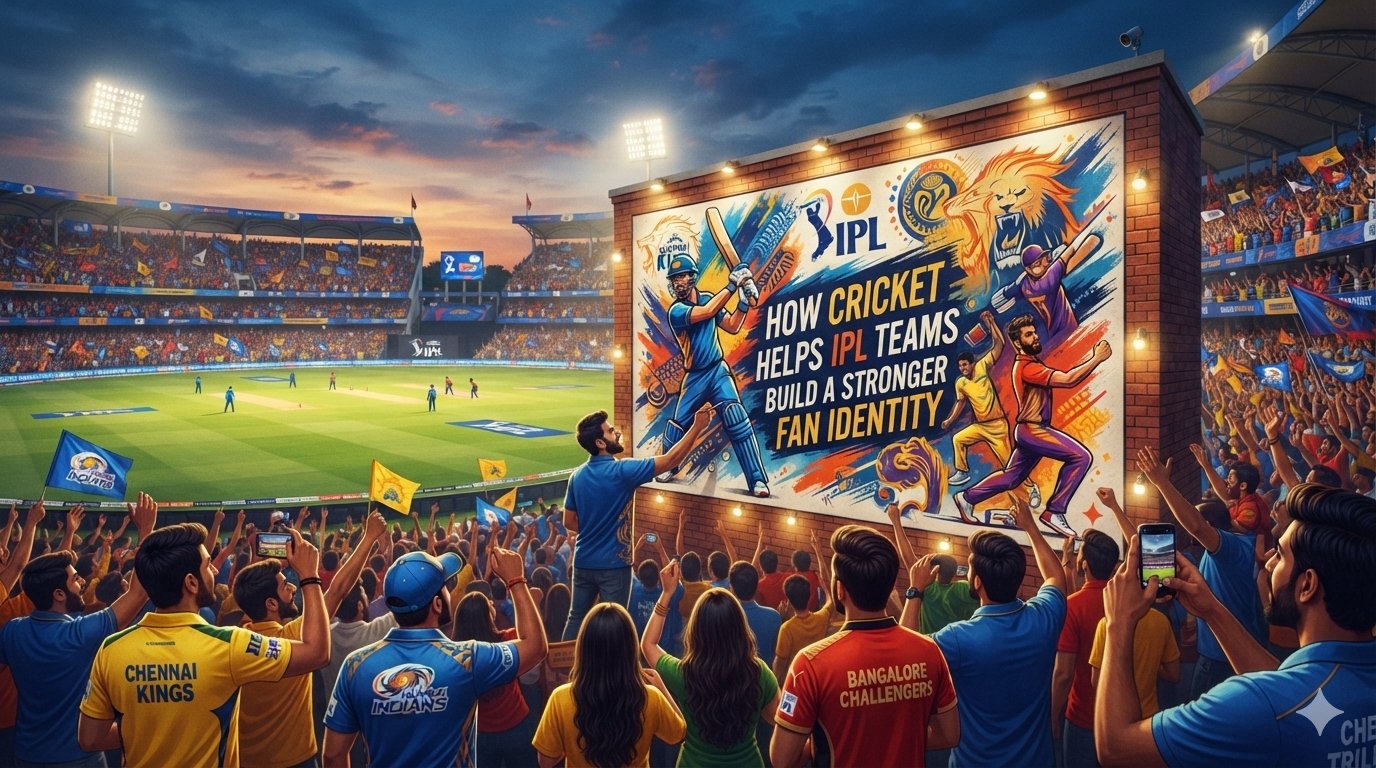
Cricket is watched through more than scorecards and match highlights. Team colours, player portraits, stadium murals, match posters and fan-made illustrations all help supporters express what a franchise means to them. During the IPL, when every team is competing for attention on and off the field, visual art can make a team’s identity feel familiar long after a match has ended.
That does not mean every graphic needs to be elaborate. The most effective cricket artwork usually starts with a clear idea: a memorable player moment, a local connection, a bold use of team colours or a detail that supporters recognise. When those elements are handled consistently, the result can give fans something to share, discuss and keep.
Why cricket and visual art work well together
Cricket provides artists with a rich mix of movement and emotion. A batter’s stance, a bowler’s delivery stride or the instant a fielder takes a catch can all become striking subjects. The sport also has strong visual settings: packed stands, floodlights, colourful kits and dramatic changes in weather or light.
There is a storytelling side, too. An illustration can recall a comeback, a long-standing rivalry or a player’s first big performance. Unlike a brief highlight clip, a poster or artwork lets a supporter pause over the details. It can also give local artists a way to interpret a moment in their own style rather than simply reproduce an official photograph.
Artwork can make a team’s identity more recognisable
For a franchise or cricket publication, visual consistency matters. A familiar palette, type style and approach to player imagery helps readers recognise a post while scrolling. That is useful across match previews, score updates, interviews and season retrospectives. The aim is not to make every image look identical, but to create a coherent family of designs.
Good cricket artwork should also respect the context. A playful illustration may suit a fan feature, while a tribute to a former player calls for a more considered tone. Team logos, player likenesses and sponsor marks may be protected, so publishers and businesses should check permissions before using them, especially in commercial work. An original illustration can offer more creative freedom, but it should not imply an official association where none exists.
Where artists can share cricket-inspired work
Artists who want to reach readers beyond their own social accounts can look for publications that cover art, illustration, sport or regional culture. A guest contribution might explain how a match-day poster was developed, show a series of cricket-inspired sketches or discuss the visual history of a team’s colours. The strongest pitch offers an idea that suits the publication’s audience, rather than sending the same portfolio note to every editor.
For a starting point, art guest posting websites and blogs can help artists and creative businesses find publications that accept contributions. Before approaching any site, check its current guidelines, audience and examples of recently published work. A relevant placement is more useful than a large list of sites that have little connection to the subject.
A focused article can include finished artwork, process images where permitted, and a clear explanation of the choices behind the design. Artists should also agree on image credits, usage rights and whether the publisher may crop or adapt the work. Those small details help avoid confusion after publication.
Commissioning creative work without slowing down a campaign
Cricket teams, fan communities and sports businesses often need artwork on a deadline. A campaign may call for a match-day graphic, an animated player introduction, a short video package or a batch of social assets. Before hiring, it helps to define the deliverables, dimensions, file formats, number of revisions and delivery date. A clear brief reduces the chance of receiving attractive work that does not fit the intended channel.
Some businesses compare marketplaces when they need faster freelance hiring for businesses, particularly for a defined project rather than an open-ended role. Osdire’s comparison with Upwork is one place to consider when reviewing how platforms handle fixed-scope services. Osdire offers services across categories that include graphics and design, writing, video and marketing, with flat pricing and payment held until the buyer approves the delivered work. As with any marketplace, buyers should inspect portfolios, confirm the scope and allow time for feedback before a major match or launch.
What makes cricket artwork worth sharing?
The best work gives supporters a reason to stop and look. It may capture a recognisable match moment, bring a local visual reference into a team design or present a familiar player in an unexpected style. It should remain legible on a phone screen, where much of the audience will see it, and it should still make sense without a long caption.
Whether an artist is creating independently or working from a commissioned brief, the process is similar: understand the audience, choose a clear story and make the visual choices serve that story. In a tournament as busy as the IPL, thoughtful artwork can give a team or cricket publication another way to connect with fans—and give artists a distinctive space in the conversation around the game.