










Sports Harmonicode: Meaning, Features, Sports Technology, Benefits and How It Works
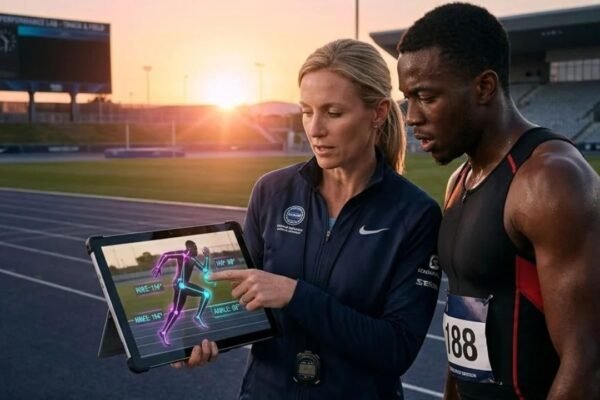
Sports technology is changing how athletes train, coaches evaluate performance, and sports organizations make decisions. From artificial intelligence (AI) to wearable fitness devices, modern innovations are helping people understand athletic performance through data and movement analysis. One interesting search term attracting attention online is Sports Harmonicode. People searching for Sports Harmonicode often want to understand its meaning, features, technology, and possible applications in modern sports. But is it an actual sports technology platform, a new training method, or simply an emerging online concept? In this article, we explore Sports Harmonicode, its website, its connection with sports analytics, and the important facts readers should know before trusting its claims. 1. What Is Sports Harmonicode? Sports Harmonicode is an online term associated with sports technology, biomechanics, artificial intelligence, and athletic performance analysis. The website Harmonicode Sports describes the concept as a combination of biomechanics, data science, and rhythmic movement analysis. According to its website, the idea involves understanding athletes’ movements, timing, coordination, and balance to support training and performance improvement. The term can be understood through two components: However, Sports Harmonicode does not currently have a universally accepted scientific definition. Its advertised technology and performance benefits should be considered website claims rather than independently proven results. 2. What Is the Harmonicode Sports Website? Harmonicode Sports is a website that presents itself as a sports technology platform. Its online descriptions discuss artificial intelligence, motion tracking, biomechanics, and performance monitoring. The website describes its intended audience as professional and amateur athletes interested in improving their training and understanding physical performance. Some of the subjects associated with the platform include: It is important to understand that a website describing these services does not automatically establish that every advertised feature is available or independently validated. Readers should examine its technical documentation, ownership details, privacy policy, and independent evidence before relying on any particular service. 3. Key Features Associated With Sports Harmonicode Sports Harmonicode is commonly discussed in connection with several sports technology concepts. These areas are already important in modern sports science. Biomechanics and Movement Analysis Biomechanics studies how the human body moves and responds to physical forces. In sports, biomechanics helps researchers and coaches understand body positioning, movement efficiency, balance, and coordination. For example, cricket coaches may examine a bowler’s action, while running coaches may study stride length and running posture. These assessments can help athletes understand their techniques and identify areas for improvement. Artificial Intelligence in Sports Artificial intelligence is becoming an important part of modern sports analytics. AI-powered software can process large datasets, identify patterns, and support performance evaluation. Some applications include player statistics, video analysis, training monitoring, and match performance evaluation. However, AI recommendations should always be interpreted carefully because data quality and model accuracy can affect results. Motion Tracking Technology Motion tracking is used to record and analyse body movements during physical activities. Depending on the equipment, it may involve cameras, wearable sensors, or specialized motion-capture systems. Researchers and sports professionals use these technologies to study running mechanics, jumping movements, athletic techniques, and coordination. Performance Monitoring Performance monitoring involves collecting information about an athlete’s training and physical activity. Common measurements include speed, distance, heart rate, training duration, and movement patterns. These measurements can help coaches evaluate training progress and make informed decisions. 4. How Does Sports Harmonicode Work? The general concept associated with Sports Harmonicode involves understanding athletic performance through movement information and digital analysis. A typical technology-assisted sports analysis process may include the following steps: Step 1: Collecting Data Information can be collected through wearable sensors, cameras, fitness trackers, and other monitoring devices. Step 2: Analysing Movement The collected information can be used to examine body positioning, movement patterns, timing, and coordination. Step 3: Understanding Performance Coaches and sports professionals review the information to identify strengths and possible areas for improvement. Step 4: Improving Training Based on the assessment, coaches may adjust exercises, training intensity, or movement techniques. These steps describe established sports-analysis practices. They should not be interpreted as confirmation of a specific Sports Harmonicode product or its technical capabilities. 5. Benefits of Sports Technology for Athletes Technology-assisted sports training offers several potential advantages when reliable equipment and appropriate methods are used. Benefit Explanation Performance tracking Helps monitor training progress Better technique Supports movement and posture analysis Data collection Provides measurable performance information Training improvement Helps coaches evaluate exercises Recovery monitoring Supports training-load management Movement awareness Helps athletes understand their techniques These benefits are relevant to professional players, amateur athletes, fitness enthusiasts, and sports coaches. However, technology alone cannot guarantee better performance. Consistent practice, suitable training, nutrition, recovery, and professional guidance remain important. 6. Role of Sports Harmonicode in Modern Sports Analytics Sports analytics involves collecting and interpreting information to understand athletic performance and competition. It is widely used in cricket, football, basketball, tennis, and other sports. For example, cricket teams analyse batting averages, bowling economy, strike rates, player fitness, and match conditions. Football analysts examine passing accuracy, player movement, possession, and scoring opportunities. Basketball teams use statistics to evaluate shooting accuracy, rebounds, assists, and defensive performance. Sports Harmonicode discussions often connect these analytical practices with movement patterns and technology. Nevertheless, sports analytics is an established discipline, while Sports Harmonicode remains a less clearly defined online term. 7. Can Sports Harmonicode Help Prevent Sports Injuries? Injury prevention is an important part of professional and amateur sports training. Sports scientists use different methods to understand physical stress, training workload, movement mechanics, and recovery. Wearable sensors and movement-analysis systems can provide useful information about an athlete’s physical activity. A 2025 research review published in the journal Bioengineering examined 73 studies on artificial intelligence in sports biomechanics. It discussed applications in movement assessment, performance analysis, and injury-risk research. However, researchers also highlighted challenges involving data quality, real-world validation, and the interpretation of AI results. This means technology can support injury-risk assessment, but it cannot guarantee injury prevention or predict every injury. 8. Sports Harmonicode vs Traditional Sports Training Traditional sports training depends on coaching experience, physical practice, repetition, and performance feedback….